Hot Dog Illustration: A Designer's Review
When I first opened the Hot Dog Illustration file, I was curious how a single food graphic would translate into a real embroidery project. Food-themed designs are popular in handmade markets, but they can be tricky to stitch well. This illustration sits somewhere between playful and clean, with a straightforward shape that doesn't try to do too much. That restraint is actually a strength. As someone who regularly tests machine embroidery designs for small business use, I've learned that the simplest concepts often perform best when they move from screen to fabric.
This review comes from a practical place. I've spent years stitching out thousands of designs for custom apparel, boutique merchandise, and personalized gifts. I know what holds up after washing, what customers smile at, and what ends up sitting in a drawer. The Hot Dog Illustration has real potential, but like any embroidery file, it needs the right project, the right fabric, and the right preparation to shine.
First Impressions and Visual Personality
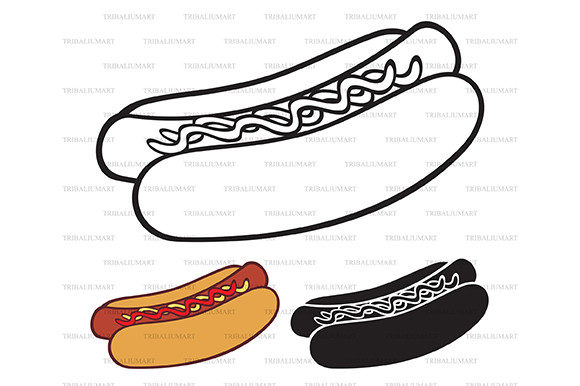
The Hot Dog Illustration delivers a friendly, nostalgic mood. It's a classic comfort food icon, and the design feels approachable without being cartoonish. The linework is simple, and the overall silhouette is recognizable from a distance. That matters for embroidery because small details can blur or distort when stitched at scale. This design avoids that problem by keeping the focus on the hot dog itself, with clear edges and a balanced layout.
The illustration belongs to the Illustrations category, and it reads like a standalone graphic that could work on its own or as part of a larger food-themed collection. For crafters and Etsy sellers, that flexibility is valuable. You can use it as a single design on a tote bag or pair it with other food illustrations for a full set of kitchen towels or aprons.
A Real Scenario: Custom Embroidered Tote Bags
Let me walk you through a real project I prepared using the Hot Dog Illustration. I wanted to create a small batch of custom tote bags for a local food truck event. The goal was simple: a clean, eye-catching design that would hold up on cotton canvas and look good enough to carry around town.
I hooped the tote bag with a medium-weight cutaway stabilizer and used a 5x7 hoop. The Hot Dog Illustration placed well within the hoop, and the design stitched out cleanly on the first try. The satin stitch outlines gave the hot dog a crisp edge, and the fill stitch areas covered evenly without gaps. I used a bright red thread for the hot dog and a warm brown for the bun. The contrast worked well on the natural canvas color.
What impressed me most was how the design read at a glance. From across a booth, people could immediately tell it was a hot dog. That kind of instant recognition is gold for small shop products. Customers don't have to squint or wonder what they're looking at. The design does its job clearly.
How It Performs Across Different Products
After the tote bag test, I wanted to see how the Hot Dog Illustration handled other common embroidery surfaces. Here's what I found:
- Custom apparel: On a sweatshirt or t-shirt, the design sits nicely on the chest area. The shape is compact enough to fit on a left chest placement without overwhelming the garment. It also works well centered on the back of a t-shirt for a bold statement piece.
- Baby clothes: The playful hot dog theme translates well to onesies and baby bodysuits. Just keep the size small enough to fit the garment and use a lightweight stabilizer to avoid puckering on delicate knit fabrics.
- Patches: This design is a natural for embroidered patches. The simple shape makes it easy to cut around, and the satin stitch border gives it a finished look. You can sew or iron the patch onto hats, jackets, backpacks, or aprons.
- Pillow covers and tea towels: Kitchen and home decor products are a strong fit. The food theme feels right at home on a tea towel or a decorative pillow cover. The design's size can be scaled up or down depending on the product, as long as you stay within your hoop size limits.
- Holiday gifts and personalized items: A hot dog design might not seem like a typical holiday gift, but for summer barbecues, Fourth of July parties, or Father's Day, it's a hit. Pair it with a name or a simple text for a personalized touch.
Where to Use This Design Carefully
Not every surface is ideal for the Hot Dog Illustration. I always recommend testing before committing to a full production run. Here are some situations where you need to be careful:
- Small hoop sizes: If you're using a 4x4 hoop, the design may need to be scaled down significantly. At very small sizes, the details of the hot dog and bun can lose definition. Test a small version on scrap fabric first to see if the stitch quality holds.
- Dark fabric: The Hot Dog Illustration relies on color contrast between the hot dog, bun, and background. On dark fabric, you may need to use a light thread color for the bun and a bright red for the hot dog. A white or light-colored underlay can also help the design pop against dark textiles.
- Stretchy or thin fabric: Performance fabrics, lightweight knits, and stretchy materials can cause the design to distort. Use a tear-away or cutaway stabilizer appropriate for the fabric type, and consider a lightweight backing to prevent show-through.
- Curved surfaces like caps: If you want to stitch this design on a cap, test the placement carefully. The design's shape is fairly linear, so it should fit on a curved cap front, but you'll need a cap hoop and a stabilizer that can handle the curve.
- Dense stitch areas: Check the stitch density before stitching. If the fill areas are too dense, the fabric may pucker or the thread may break. Adjust density settings in your embroidery software if needed.
Visual Appeal, Product Value, and Customer Trust
When customers see a well-stitched Hot Dog Illustration on a finished product, they perceive value. The design is clean, recognizable, and visually satisfying. In a handmade market full of generic fonts and clip art, a cohesive food illustration like this stands out. It tells the customer that the maker put thought into the design.
For Etsy sellers and small shop owners, this design can help build brand consistency. If you sell food-themed products, using a set of Illustrations like this one creates a unified look across your shop. Customers learn to recognize your style, and that builds trust and repeat business. The Graphics category provides a versatile base that you can use in digital mockups, printable previews, and social media posts before you even stitch a single item.
Buyer engagement also improves when the design is easy to understand. A customer scrolling through an Etsy listing will stop on a product that clearly shows a hot dog. It's familiar, fun, and immediately relatable. That emotional connection is what drives sales, especially for personalized gifts and boutique products.
Practical Embroidery Designer Notes
Before you use the Hot Dog Illustration in a paid project, take these steps to ensure quality and professionalism:
- Test on scrap fabric first. Always stitch a sample on the same fabric you plan to use for the final product. Check for thread breaks, gaps, and distortion.
- Check thread color contrast. The design depends on clear separation between the bun, hot dog, and background. If you're using similar colors, the design may blend together and lose impact.
- Review stitch density. Open the file in your embroidery software and look at the density settings. If the fill stitches are too tight, reduce the density to prevent fabric damage.
- Confirm hoop size. Make sure the design fits within your hoop before you start. If you need to resize it, keep the proportions locked and test the new size.
- Inspect small details. Zoom in on the design to see if there are any tiny elements that might not stitch well at your intended size. Simplify or remove them if necessary.
- Test black and white mockups. Before stitching, view the design in grayscale. This helps you see contrast issues and identify areas where the design might not read clearly.
- Compare light and dark fabric backgrounds. Stitch the design on both a light and a dark fabric to see how the colors shift. Adjust thread colors or add an underlay as needed.
- Use proper stabilizer. Match the stabilizer to the fabric weight and stretch. A cutaway stabilizer is usually best for stable results, especially on apparel.
- Check licensing for commercial use. Since this is a digital file, confirm whether you can use it for finished products you sell. Some designs come with restrictions, so read the terms carefully before listing items in your shop.
- Consider the end user. If you're making a personalized gift, think about the recipient's personality. The Hot Dog Illustration works great for food lovers, kids, and anyone with a playful sense of humor.
Final Thoughts on the Hot Dog Illustration
The Hot Dog Illustration is a solid choice for embroidery designers, small business owners, and crafters who want a reliable, marketable design. It's simple enough to stitch cleanly on a variety of products, yet distinctive enough to catch a customer's eye. The Illustrations category gives you a graphic that feels like a real design asset, not a generic clip art afterthought.
I've used it on tote bags, t-shirts, and tea towels, and each time it performed well. The key is to test your setup, choose the right stabilizer, and pay attention to color contrast. If you're looking for a food-themed design that will hold up in production and appeal to a broad audience, this one is worth adding to your library. Whether you're an Etsy seller building a collection or a hobbyist making gifts for friends, the Hot Dog Illustration delivers a friendly, professional result that people will actually enjoy receiving.