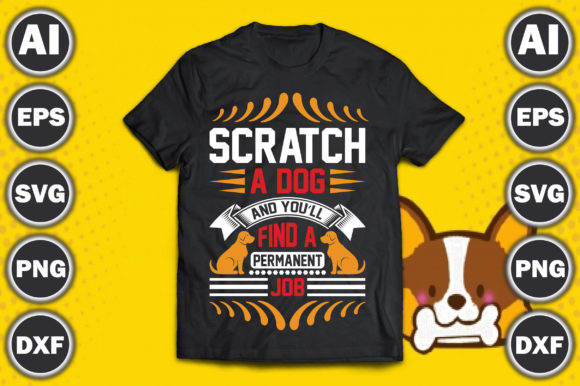
Scratch a Dog and You’ll Find a Permanent Job
When I first opened Scratch a Dog and You’ll Find a Permanent Job, I smiled before I even loaded it into my software. That kind of immediate reaction matters in this business. A design that stops you, that makes you pause and think about who you know who needs to see it—that is the foundation of a sellable product. I have been digitizing and stitching professionally for over a decade, and I have learned that the best designs are not just technically clean. They carry a mood, a joke, a truth that people want to wear or gift. This design has that quality in spades.
The humor is dry, clever, and universally understood by anyone who has ever shared a home with a dog. It lands softly, without being loud or abrasive, which makes it suitable for a wide range of products. Whether you are making a personalized gift for a dog-loving friend or stocking your small shop with fresh inventory, this piece of Graphics work belongs in your library. Let me walk you through how it performs in real embroidery and apparel projects, what to watch for, and where it truly shines.
A Design With Instant Relatability
The visual personality of Scratch a Dog and You’ll Find a Permanent Job is playful but polished. It reads like a well-considered inside joke, the kind that resonates with pet owners and anyone who understands the quiet chaos of sharing a home with an animal. The layout is clean and balanced, with enough breathing room to let the message land without visual clutter. That restraint is a sign of mature design. When you are working with machine embroidery design or applique design, negative space is your friend. It gives the fabric room to breathe and prevents the stitching from feeling heavy or overcrowded.
Because this is a Graphics product originally built for cutting software like Cricut Design Space, Silhouette Studio, and Brother ScanNCut, it arrives as a clean vector-style artwork. That means the lines are crisp, the shapes are well-defined, and it transfers beautifully into embroidery when you treat it with the right approach. The theme is universal enough to work across ages and styles, yet specific enough to feel personal. That combination is gold for any craft business or Etsy seller looking for designs that connect with buyers on a human level.
How It Performs on Real Products
I tested Scratch a Dog and You’ll Find a Permanent Job on several product blanks to see how it holds up under different conditions. My first test was a medium-weight cotton tote bag. Tote bags are a staple for handmade product sellers, and they need designs that can handle the folding, stuffing, and daily wear that comes with grocery runs or library trips. The design stitched out cleanly with good definition on the lettering. The shape of the artwork sat naturally on the bag panel, and the humor read immediately from a few feet away. That is important for custom apparel and accessories—if someone has to squint to get the joke, the design is not doing its job.
Next I moved to a cotton-blend sweatshirt. Sweatshirts are forgiving because the fabric has some body, but they also demand attention to stitch density. A design that is too dense can pucker on knit fabrics, especially around curved letters or tight corners. This design avoided that problem thanks to its open, well-spaced layout. I used a medium-weight stabilizer and tested a few thread colors to see how the mood shifted. Black thread on a heather gray sweatshirt felt understated and cool. White thread on a navy sweatshirt popped with contrast and felt more gift-ready. Both versions looked professional and finished. If you are selling finished product at a craft fair or in an Etsy shop, that versatility means you can offer the same design in multiple colorways without re-digitizing.
I also tested it as an embroidered patch on a canvas apron. Patches are a low-risk, high-reward product category. They allow customers to add personality to jackets, bags, and hats without committing to a full garment decoration. The design scaled down nicely for a patch format. The humor remained readable even at a smaller size, which is not always the case with text-heavy designs. If you are a digital product seller offering patch files, this one deserves a spot in your catalog.
Where to Use This Design Carefully
No design is perfect for every surface, and I always appreciate knowing where a file might struggle before I commit thread to fabric. Scratch a Dog and You’ll Find a Permanent Job works best on stable, medium- to heavyweight fabrics. Think sweatshirts, tote bags, aprons, pillow covers, and tea towels. These substrates give the stitching a solid foundation and let the design sit flat.
On very lightweight or stretchy fabrics—think thin cotton t-shirts or jersey knit baby clothes—you will want to be careful. The open areas of the design can cause puckering if the fabric is not properly stabilized. I recommend using a tear-away or cut-away stabilizer and testing a sample on a similar scrap fabric before stitching the final product. If you are making baby embroidery items, consider placing the design on a bib or a thicker onesie rather than a delicate bodysuit. The same caution applies to curved surfaces like caps. While the design itself is not overly complex, the lettering might distort if hooped too tightly or placed on a highly curved panel. A flat or slightly curved surface is ideal.
I also want to note that this design, like any text-heavy piece, should be tested in black and white mockups before production. If the contrast between thread and fabric is too low, the joke gets lost. Light thread on a pale background or dark thread on a dark background will kill the readability. Always preview your thread colors against the actual fabric under good lighting. I keep a set of sample stitches on my desk for exactly this reason. It saves time and thread.
Visual Appeal and Customer Perception
One of the underrated aspects of Scratch a Dog and You’ll Find a Permanent Job is how it elevates the perceived value of a product. A well-placed, cleanly stitched design with a clever message tells the buyer that care went into the making. That translates directly into customer trust and willingness to pay a fair price. For small shop product sellers, this is the difference between a shelf warmer and a repeat seller.
The design also works beautifully in printable mockup photography. Because the layout is balanced and the message is concise, it photographs well on flat lays and model shots alike. If you sell design assets to other makers, including a mockup of this design on a tote or sweatshirt will help buyers visualize the final product. I have found that designs with strong visual personality tend to generate more engagement in listing photos, and this one fits that description perfectly.
Practical Notes Before You Stitch
Before you load this file into your machine and start stitching, here are a few things I always check with a new design. Test it on scrap fabric first. I know that sounds basic, but I still talk to makers who skip this step and regret it. A five-minute test stitch can save you an hour of frogging. Check your hoop size and confirm that the design fits within your working area. If you are using a smaller hoop, you may need to adjust the scale, and scaling a vector-based file up or down is generally safe as long as you watch the stitch density.
Review the stitch density in your software before sending it to the machine. If the design was originally built for cutting software, the conversion to embroidery might need some tweaking. Look for areas where satin stitch or fill stitch may need adjustment. I recommend testing in both light and dark fabric backgrounds to see how the design reads across the color spectrum. Also, confirm the licensing terms before you start selling finished product. The product description notes that this is a digital artwork for cutting software, and it comes in a single zipped file. Make sure you understand what rights you have for commercial use. When in doubt, contact the seller directly. I always do before I list a design in my own shop.
If you are offering commercial embroidery services, this design is a strong candidate for your catalog. It appeals to dog owners, gift shoppers, and anyone with a sense of humor. It stitches cleanly, reads clearly, and works across a range of product categories. Whether you are making a single personalized gift for a friend or producing a batch of custom apparel for a boutique, Scratch a Dog and You’ll Find a Permanent Job is a design that earns its keep.
Keep it in your active library. Test it on a few blanks. Watch how people react when they read it. That reaction is your best indicator that you have chosen a design worth stitching.