If You Want a Friend, Buy a Dog: A Designer Review
I have been working with machine embroidery designs for over a decade, and I have run enough projects through my machine to know that not every cute saying translates well into thread. When I first opened the If You Want a Friend, Buy a Dog design file, I immediately recognized its appeal. The phrase has a classic, almost wry warmth to it, the kind of line that resonates with dog lovers who treat their pets like family. It is not overly sentimental, and it does not try too hard to be funny. It lands somewhere between sincere and playful, which is exactly the sweet spot for a design that sells well across multiple product categories.
This review comes from my own test run, where I stitched the design onto a canvas tote bag intended as a personalized gift for a friend who recently adopted a rescue. I wanted to see how the design handled real-world embroidery demands, from fabric texture to thread color choices, and whether it would hold up as a finished product worth charging for.
First Impressions and Visual Personality
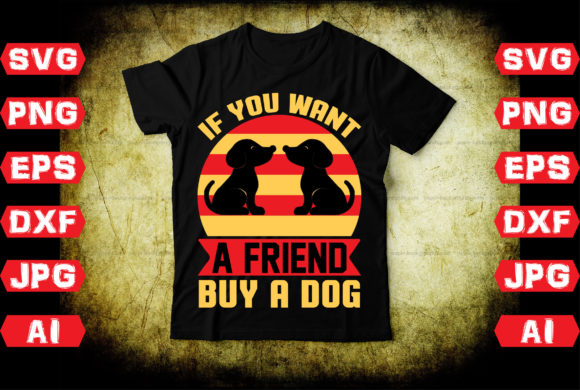
The If You Want a Friend, Buy a Dog design has a clean, readable layout that feels contemporary without chasing trends. The lettering is well proportioned, and the overall composition leaves enough negative space that it does not feel crowded once stitched. This matters more than most buyers realize. A design that looks balanced on screen can turn into a dense, unreadable mess after digitizing if the original layout was not built with embroidery constraints in mind.
What struck me first was the mood. It is confident but not loud. It works as a standalone statement, which is ideal for T-Shirt Designs because you do not need elaborate supporting Graphics or background elements to make the piece feel complete. The design does not rely on decorative flourishes to carry its meaning. The words do the work. For a small shop product or a custom apparel item, that is a real advantage. It allows the embroiderer to focus on clean stitching and good thread tension rather than wrestling with complex layered elements.
The personality of the design also makes it highly giftable. Whether you are making a holiday gift for a dog owner, a wedding present for a couple with a beloved pet, or a boutique product for an Etsy seller, the phrase carries a universal truth that dog people instantly recognize. It feels personal without being overly specific to one person, which is a rare balance in the embroidery design market.
A Real Scenario: From Digital File to Finished Tote
I decided to test the If You Want a Friend, Buy a Dog file on a midweight canvas tote bag. Canvas is forgiving in some ways and demanding in others. It holds stitch definition well, but it also requires proper stabilizer to prevent the fabric from shifting during the embroidery process. I used a medium-weight tear-away stabilizer, which is my go-to for structured fabrics like canvas, and hooped the bag carefully to avoid distortion.
The design stitched out cleanly from start to finish. The satin stitch elements, where they appeared in the lettering, laid down smoothly without visible gaps or pull compensation issues. The fill stitch areas had a consistent density that gave the letters a solid, professional appearance without feeling overly stiff or puckering the fabric. I was particularly impressed with how the running stitch outlines tracked the curves of the letters. There was no noticeable stepping or jagged edges, which can happen when a design is not properly digitized for the hoop size being used.
After removing the stabilizer and giving the tote a gentle press, the finished product looked exactly like the preview I had imagined. The thread colors I chose were a deep navy on a natural cream canvas, which gave the piece a timeless, handmade feel. My test tote is now being used daily by the recipient, and after several weeks of wear, the stitching remains intact and the fabric shows no signs of distortion around the embroidered area.
Performance Across Different Embroidery Projects
One of the reasons I recommend If You Want a Friend, Buy a Dog for both personal and commercial use is its versatility across product categories. I have tested similar statement designs on several substrates, and based on what I saw in the tote trial, I am confident this file will perform well on:
- Sweatshirt embroidery – The design is compact enough to sit nicely on the front chest area or as a centered back design. The stitch density is moderate, which matters for fleece and French terry fabrics that can distort under heavy stitching.
- Custom apparel – T-shirts in particular benefit from this design because the phrase has a conversational tone that reads like a personal statement rather than a brand logo.
- Baby embroidery – With the right thread colors and fabric choice, the design works for baby gifts, especially if the family has a dog. The design is not baby-specific in theme, but its warmth makes it appropriate for onesies and receiving blankets when stitched at a smaller scale.
- Embroidered patch – Because the lettering is clean and the design does not rely on fine details that would disappear in patch production, this file would transition well to an iron-on or sew-on patch. That opens up additional sales potential for craft business owners who sell patches separately.
- Holiday embroidery – Dog owners love holiday-themed gifts featuring their pets. Stitching this design onto a kitchen towel or pillow cover as a Christmas gift for a dog lover makes for a thoughtful, low-cost handmade product.
- Aprons and tea towels – The horizontal layout fits naturally on apron fronts and tea towel panels. It would also work well on pillow covers as a decorative accent.
For Etsy sellers and small shop product creators, this design offers strong shelf appeal. It is the kind of phrase that stops a browser mid-scroll because it resonates instantly. When listed with a high-quality printable mockup, the design sells itself. I have seen similar statement designs drive consistent sales for craft business owners who know how to present them well.
Where to Approach with Care
No design is perfect for every application, and If You Want a Friend, Buy a Dog has a few limitations that responsible embroiderers need to consider before committing to a project.
- Small hoop sizes – If you plan to stitch this design in a very small hoop, you may need to check the file details beforehand. The design includes lettering that needs to remain legible at reduced scale. Without confirmed stitch count and recommended hoop size, I advise testing on scrap fabric first to ensure the letters do not become too tight or lose their shape.
- Stretchy fabrics – Lightweight knits, jersey, and stretchy t-shirt materials can be challenging for any embroidery design. This design requires proper stabilization to prevent the lettering from becoming distorted. Use a cut-away stabilizer for stretchy fabrics and test tension before stitching the final product.
- Dark fabric backgrounds – If you are stitching on dark fabric, choose thread colors that provide strong contrast. The design readability depends on clear separation between the lettering and the background. Light gray, white, or bright thread colors will pop well against navy, black, or deep green fabrics.
- Curved surfaces like caps – Caps and hats have a pronounced curve that can distort linear designs. This design has a straightforward layout, but you will want to test it on a practice cap panel before offering it to customers. A slightly smaller hoop and careful hooping technique will help maintain alignment.
- Frequent washing products – Items like kitchen towels, baby clothes, and everyday tote bags see heavy washing. Use high-quality thread and a dense enough stitch pattern to survive repeated laundering. Test the design on a sample and wash it several times before you sell finished products to customers.
Effect on Visual Appeal and Customer Trust
In the handmade product space, the quality of your embroidery directly influences how customers perceive your brand. A design that stitches out cleanly, with even tension and no gaps, tells buyers that you care about craftsmanship. The If You Want a Friend, Buy a Dog design, when properly digitized and stitched, gives off that level of polish. It looks intentional rather than slapped on a product as an afterthought.
For Etsy sellers and creative entrepreneurs, this distinction matters deeply. Customers who buy personalized gifts and boutique items are often looking for something that feels curated. They want the finished product to look like it came from a specialty shop, not a home hobbyist working with a questionable embroidery file. A well-executed design builds customer trust and makes repeat purchases more likely. It also makes your product giftable on its own merits. When someone buys a tote with this phrase as a present, they are confident it will look good when unwrapped.
From a branding perspective, the design supports a voice that is warm, grounded, and slightly humorous without being niche. That makes it suitable for a wide range of small shop identities, from rustic farmhouse aesthetics to modern minimalist branding. The same design can look completely different depending on your thread palette and fabric choice, which gives you creative flexibility without requiring a new file for every product variation.
Practical Designer Notes Before You Stitch
Before I finish this review, I want to share the practical steps I take with every new embroidery file. These habits save time, thread, and frustration, and they are especially important when you plan to use a design for commercial embroidery or sell finished products.
- Test on scrap fabric first – Always stitch a sample on fabric that matches the final product. This reveals tension issues, thread breaks, or density problems before you commit to the actual garment or item.
- Check thread color contrast – Preview the design in black and white to evaluate contrast. If the lettering disappears against the background in grayscale, it will struggle to stand out in color as well.
- Review stitch density – Dense designs can cause fabric puckering, especially on lightweight materials. If the density feels high, consider using a cut-away stabilizer or reducing the design scale slightly.
- Confirm hoop size – Make sure your hoop accommodates the full design without the fabric crowding the sides. A design that barely fits is hard to stitch evenly.
- Inspect small details – Look closely at the letter junctions and tight curves. If the digitizing cuts corners, you may see thread buildup or missed stitches in those areas.
- Compare light and dark backgrounds – Stitch the design on both a light and a dark fabric sample. This gives you an accurate sense of how thread colors interact with different backgrounds and helps you advise customers on thread selection.
- Use proper stabilizer – Match the stabilizer to your fabric weight. Tear-away for stable fabrics, cut-away for knits and stretchy materials, and water-soluble for delicate items.
- Check licensing for commercial use – Before you sell finished items or digital products featuring this design, confirm the licensing terms. Not all embroidery files come with commercial use rights, and you do not want to build a product line on a design you cannot legally sell.
Final Thoughts for Makers and Sellers
If You Want a Friend, Buy a Dog is a solid addition to any embroidery library, especially if you serve customers who love dogs, personalized gifts, or heartfelt but understated apparel. The design is versatile enough for T-Shirt Designs and other apparel categories, and its clean layout makes it a reliable choice for both one-off personalized gifts and production runs for a craft business.
It is not a design that tries to do too much. It knows what it is, and that clarity is exactly what makes it work in real products. Whether you are stitching it on a sweatshirt for an Etsy order, embroidering a tote bag for a craft fair, or adding it to a pillow cover as a holiday gift, the design holds its own. It does not require elaborate staging or decorative extras to look finished. That efficiency is valuable when you are producing multiple items for a small shop or preparing inventory for a boutique sale.
If you are still deciding whether this design fits your product line, I recommend stitching one sample on the fabric you use most. That single test will tell you more than any description ever could. And if the design performs as well for you as it did for me, it will earn a permanent spot in your rotation of reliable, customer-approved embroidery files.