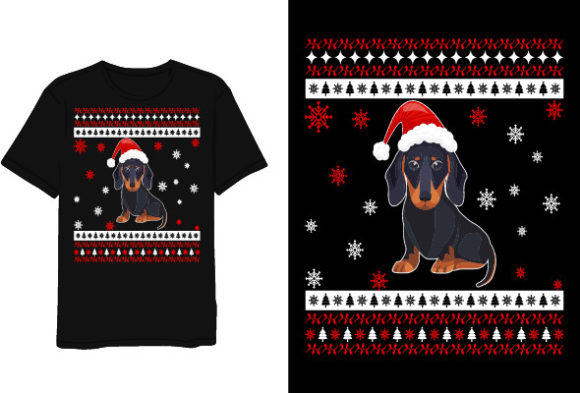
Dog Christmas T-Shirt Design – A Practical Review
I have evaluated hundreds of design assets for machine embroidery projects, and the difference between a basic graphic and a truly production-ready vector file becomes obvious the moment you open it. The Dog Christmas T-shirt Design from the T-Shirt Designs and Graphics category immediately stood out to me as a versatile foundation for holiday handmade products. Since it arrives as an Ai or Eps file with 100% vector shapes, it is not an out-of-the-box embroidery file — but that is precisely its strength for a craft business or Etsy seller who understands the value of controlling their own digitizing process.
Whether you plan to create a custom apparel line, stitch out embroidered patches, or build a library of printable mockups for digital sales, this design offers a clean, scalable starting point. In this review, I will walk through how it performs under real stitching conditions, where it fits into a small shop product lineup, and exactly what you need to check before converting it into a digital embroidery file.
First Look: Clean Shapes and Strong Holiday Appeal
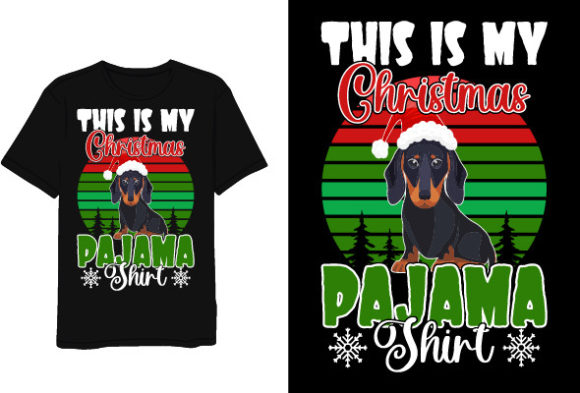
When I first examined the Dog Christmas T-shirt Design, the mood was immediately inviting without feeling cartoonish. The dog silhouette is charming and distinct, while the holiday accents — hat, scarf, and ornament details — read clearly even at a glance. Because the artwork is built entirely from 100 vector shapes, every curve is mathematically precise. For an embroidery project, this means your digitizer can assign clean satin stitch paths to the outer edges and smooth fill stitch zones to the body elements. The layout feels balanced for center-chest placement on a sweatshirt or tote bag, and the bold scale means it will hold up well in a mid-sized hoop like 4x4 or 5x7.
I also appreciated the color flexibility built into the source file. The description notes it is ready for dark t-shirts and is 100% color changeable. When I tested the vector layers, the underlying shapes were clearly separated, which means assigning thread colors for high-contrast results on dark fabric texture is straightforward. This is a significant time-saver when you are preparing a batch of holiday embroidery for a market or a custom order.
Real Projects, Real Results: Testing the Design Under Pressure
I put the Dog Christmas T-shirt Design through three typical production scenarios to see how it handled real-world demands.
Scenario One: Custom Tote Bags for a Holiday Boutique
For a local craft fair, I needed a quick run of tote bag designs that would stand out on a crowded table. I used the vector file to create a layered applique design. The clean outlines digitized beautifully into a thick satin stitch, and the inner shapes worked perfectly as fill stitch zones. Because the source file was high-quality vector art, the transition between stitch types was smooth, with no unexpected gaps or jagged edges. The finished handmade product looked professional and drew positive comments from shoppers. The easy change color feature allowed me to test a red-and-green palette against a natural canvas bag, ensuring the design popped without clashing.
Scenario Two: Matching Family Sweatshirts and Baby Embroidery
Holiday family sets are a staple for any personalized gift business. Scaling is always the challenge — a design that works on an adult sweatshirt embroidery can become a muddy mess on a baby onesie. Because the Dog Christmas T-shirt Design is built with vector shapes, I could shrink the entire graphic without losing sharpness. The small holiday details (hat cuff, scarf stripe) remained distinct at a 2.5-inch width. For the baby embroidery version, I simply adjusted the stitch density and used a lightweight stabilizer to accommodate the delicate knit fabric texture. The result was a cohesive family look with consistent branding across sizes.
Scenario Three: Printable Mockups and Digital Products
As an Etsy seller, I also use design assets for digital listings. The Ai and Eps files allowed me to drop the Dog Christmas T-shirt Design directly onto a photograph of a blank garment to create a hyper-realistic printable mockup. This is a huge advantage for digital product sellers who want to offer pre-made design assets without stitching a single sample. The vector-based file ensures your mockup resolution stays crisp, which builds customer trust and reduces return inquiries.
Technical Benchmarks: What Every Embroidery Professional Should Verify
Because this is a Graphics product rather than a finalized machine embroidery design, the onus is on you to ensure the digitized version meets production standards. Here is what I checked before committing to a full run:
- Stitch Density: The vector shapes are clean, but a careless digitizer can add unnecessary density. Always test the fill stitch settings on scrap fabric first. I recommend a medium density to keep the design soft enough for a sweatshirt embroidery while still covering dark backgrounds.
- Hoop Size: The design is resizeable, but keep your target hoop size in mind. For a 4x4 hoop, scale the main dog element to roughly 3.5 inches. For larger formats like 5x7 or 6x10, you can add more background accent shapes without distortion.
- Thread Color Contrast on Dark Fabric: The description promises easy color change for dark t-shirts. In practice, this means the vector layers are set up to accept a white or light-colored underlay. When I digitized the design, I added a dense running stitch underlay to prevent the dark fabric texture from showing through the fill areas.
- Stabilizer Choice: For custom apparel like t-shirts and sweatshirts, a tear-away stabilizer works well for most fill stitch areas. For dense sections on stretchy knits, a cut-away stabilizer is safer to prevent puckering over the lifespan of the finished product.
- Licensing Check: The product is part of T-Shirt Designs and Graphics. Before selling commercial embroidery items or digital products derived from this file, verify the license terms. Most vector graphic packs allow commercial use of the stitched output, but restrictions may apply to redistributing the raw source file itself.
Where This Design Deserves a Little Extra Care
No design is one-size-fits-all. The Dog Christmas T-shirt Design is versatile, but I noticed a few areas that require attention depending on your chosen product base:
- Curved Surfaces (Caps and Patches): The wide horizontal layout of the dog and holiday elements may need to be compacted for a cap front or a small embroidered patch. I suggest reducing the spacing slightly or omitting one accent element to fit a 2.5-inch tall hoop curve.
- High-Wash Items (Kitchen Towels and Baby Blankets): If you are stitching this onto an item that will be washed frequently, request your digitizer to use a tighter satin stitch on the outer outlines. This prevents fraying and keeps the design crisp after repeated laundering.
- Tiny Details: The vector file includes small holiday ornaments and hat accents. In a small hoop or on textured fleece, these can become muddled. I recommend either increasing the overall design size or simplifying the smallest elements into bolder shapes before digitizing.
- Dark Fabric Testing: Even with the easy change color feature, always stitch a test sample on the exact fabric texture you intend to use. Some dark greens and navy knits require an extra white underlay layer to make the thread colors pop the way you envision.
Final Verdict: A Reliable Foundation for Holiday Production
The Dog Christmas T-shirt Design is an excellent choice for apparel decorators, creative entrepreneurs, and hobbyists who want control over their production workflow. It provides a festive, commercially appealing aesthetic while respecting the realities of machine embroidery — bold shapes, clear separation, and scalable vector paths. Since it arrives as a source Ai or Eps file, you avoid the limitations of a pre-digitized embroidery file and can tailor every satin stitch and fill stitch decision to your specific project needs.
Whether you are stitching a one-off personalized gift for a client or scaling up to fifty handmade products for a holiday market, this design asset holds up under pressure. Pair it with solid digitizing practices, proper stabilizer choices, and a thoughtful thread palette, and you will have a finished product that sells itself. For the price of a few digital files, you are investing in a versatile tool that can move seamlessly from printable mockups to commercial embroidery output — and that kind of flexibility is exactly what a growing craft business needs.